Key takeaways
- In NFIP communities, a federally backed or federally regulated loan on a building in a zone starting with A or V requires flood insurance.
- AE and VE zones show a base flood elevation; an elevation certificate tells you how high the building sits against it.
- Zone X carries no federal flood insurance mandate, but FEMA says about one in three flood claims come from outside high-risk areas.
- Florida sellers of residential property must give buyers a flood disclosure at or before signing the contract.
- Miami-Dade has preliminary FEMA maps that are not yet effective, so check both the current and the preliminary zone.
What does flood zone AE mean?
Flood zone AE is the part of FEMA's flood map where the base floodplain has been studied in detail and a base flood elevation is shown. FEMA's glossary calls it "the base floodplain where base flood elevations are provided."
AE sits inside the Special Flood Hazard Area, the land FEMA expects to be covered by a flood that has a 1% chance of being equaled or exceeded in any given year, also called the base flood or 100-year flood (FEMA flood zone glossary).
So the flood zone AE meaning comes down to two things: the area is high risk, and the map gives a number to measure a building against. That number is the base flood elevation, the height FEMA expects water to reach in that base flood (FEMA). Older maps used numbered A zones for the same idea; FEMA says AE zones "are now used on new format FIRMs instead" (Zone AE). A FIRM is a Flood Insurance Rate Map.
FEMA's glossary entries for other high-risk zones, such as AH, AO and VE, put that yearly chance in mortgage terms: a 26% chance of flooding over the life of a 30-year mortgage (Zone AH, Zone AO, Zone VE). Miami-Dade County uses the same framing for zone A, "at least a one-in-four chance of flooding during a 30-year mortgage" (Miami-Dade flood zone maps).
Miami flood zones at a glance: AE, AH, AO, VE, X and D
Miami-Dade's flood maps use the same letters as the rest of the country. Zones that start with A or V are high risk; X is moderate or minimal risk; D means the risk has not been studied. The table follows the definitions on FEMA's glossary and Miami-Dade County's flood zone page.
| Zone | What it is | Federal insurance rule with a federally backed mortgage |
|---|---|---|
| AE | High risk floodplain with a base flood elevation shown | Required |
| A | High risk; no detailed analysis, so no base flood elevation | Required |
| AH | High risk shallow flooding, usually ponding, average depth one to three feet | Required |
| AO | High risk shallow flooding, usually sheet flow, average depth one to three feet; depths shown instead of elevations | Required |
| VE | High risk coastal area with an added hazard from storm waves | Required |
| X (shaded) | Moderate risk, between the base flood and the 500-year flood | Not federally required; FEMA recommends it |
| X (unshaded) | Minimal risk, above the 500-year flood level | Not federally required; FEMA recommends it |
| D | Possible but undetermined hazard | Not federally required; FEMA recommends it |
Zones AO and AH come straight from FEMA: AO is shallow flooding "usually in the form of sheet flow," AH is "usually in the form of a pond," both with "an average depth ranging from 1 to 3 feet" (AO, AH). Miami-Dade's page adds that zone D areas in the county mostly "fall within Everglades National Park." On older maps, shaded zone X was labeled zone B and unshaded zone X was zone C (FEMA).
Flood zone AE vs X: what changes for a buyer
The difference between AE and X for a buyer is mostly the federal insurance rule, though AE also comes with a published base flood elevation that matters for the building's elevation records and the renovation limits covered below. A federally backed mortgage on a building in AE requires flood insurance; in X the federal mandate does not apply. FEMA's FloodSmart site still describes the lower risk designation as "a low, but still meaningful, flood risk" (FloodSmart).
FEMA's FloodSmart site says that from 2014 to 2024, "almost one-third of NFIP flood claims came from areas outside of high-risk flood areas" (FloodSmart). Miami-Dade County's page makes the same point for zone X: the chance of flooding is "reduced but not completely removed," and flood insurance is recommended there although federal law does not require it.
In practice, a financed purchase in AE adds a required flood policy, which for many loans is paid through the lender's escrow under federal flood insurance law (42 U.S.C. 4012a(d)), and often an elevation certificate. A building in X skips the mandate but still deserves the same look at its flood history and elevation.
What is flood zone VE?
Flood zone VE is a coastal high-risk area where storm waves add to the flood hazard. FEMA defines VE as "coastal areas with a 1% or greater chance of flooding and an additional hazard associated with storm waves," with base flood elevations shown at selected intervals (Zone VE). Zone V is the same hazard without base flood elevations (Zone V).
FloodSmart says flood insurance is mandatory in V and VE for federally backed mortgages in communities that take part in the National Flood Insurance Program (FloodSmart). FEMA's elevation certificate rules also measure V zone buildings differently: in zone A the certificate records the lowest floor elevation, and in zone V the elevation of the lowest horizontal structural member (FEMA).
How to look up a property's flood zone in Miami-Dade
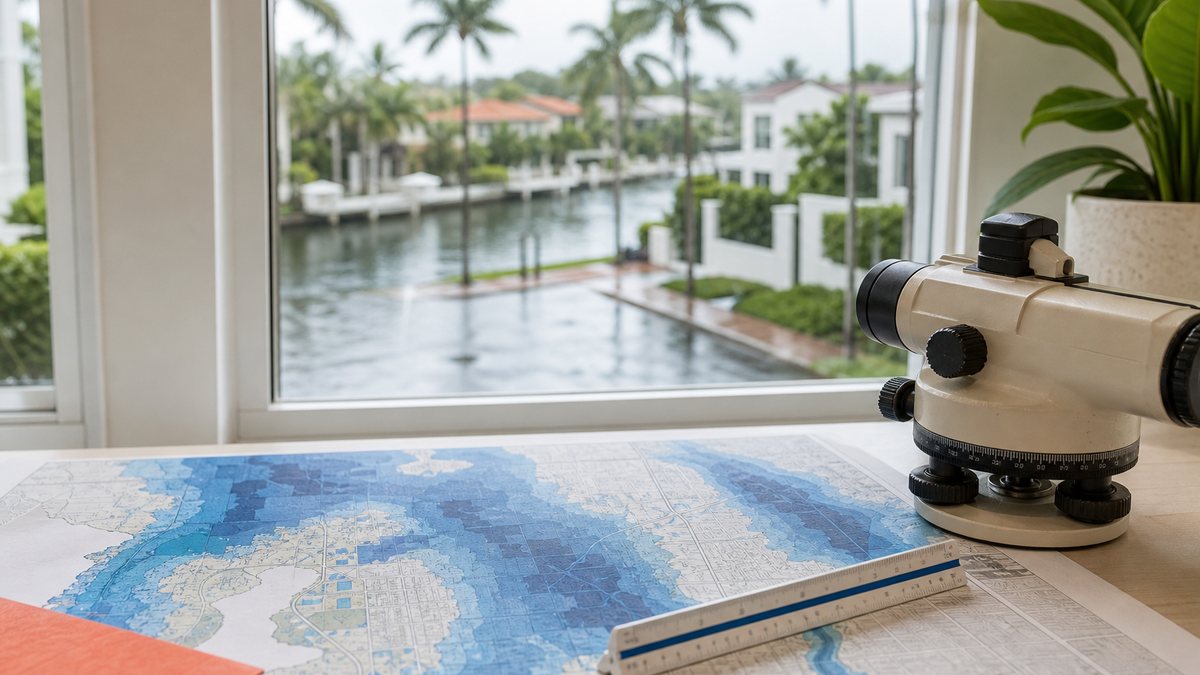
You can look up a Miami-Dade property's flood zone by address with the county's interactive flood zone tool, linked from its Flood Zone Maps page. The county says to enter your address in the tool, and for confirmation of a property's official designation to call its office or your insurance agent. The same page says the maps can also be downloaded from FEMA's Flood Map Service Center.
- Search the address on the county tool or the FEMA Map Service Center and note the zone and any base flood elevation.
- Check the preliminary maps too. Miami-Dade says FEMA published preliminary maps for the county in 2021, that they "may change," and that they "are not currently effective."
- For a condo, look up the building, then ask the association which zone its insurance uses.
- Ask the seller for the elevation certificate and the Florida flood disclosure.
- Before you sign, ask your lender whether the loan will require flood insurance.
The City of Miami Beach building department warns that FEMA's map update "may result in changes in the flood zone and base flood elevation" for owners (City of Miami Beach).
Our building pages, reached from hubs such as Miami-Dade County homes and data and Miami Beach homes and condos, show the FEMA zone as MIAMI MLS listings report it for that building. A listing's zone is a starting point. Confirm the current map for the specific unit or lot.
If you think a property is mapped into a high-risk zone by mistake, FEMA takes map change requests. A Letter of Map Amendment covers a structure or parcel "on naturally high ground" that would not be flooded by the base flood, and a Letter of Map Revision Based on Fill covers land raised by earthen fill. If FEMA grants it, the owner "may no longer be required to pay flood insurance" and can send the letter to the lender (FEMA map changes).
Base flood elevation and the elevation certificate
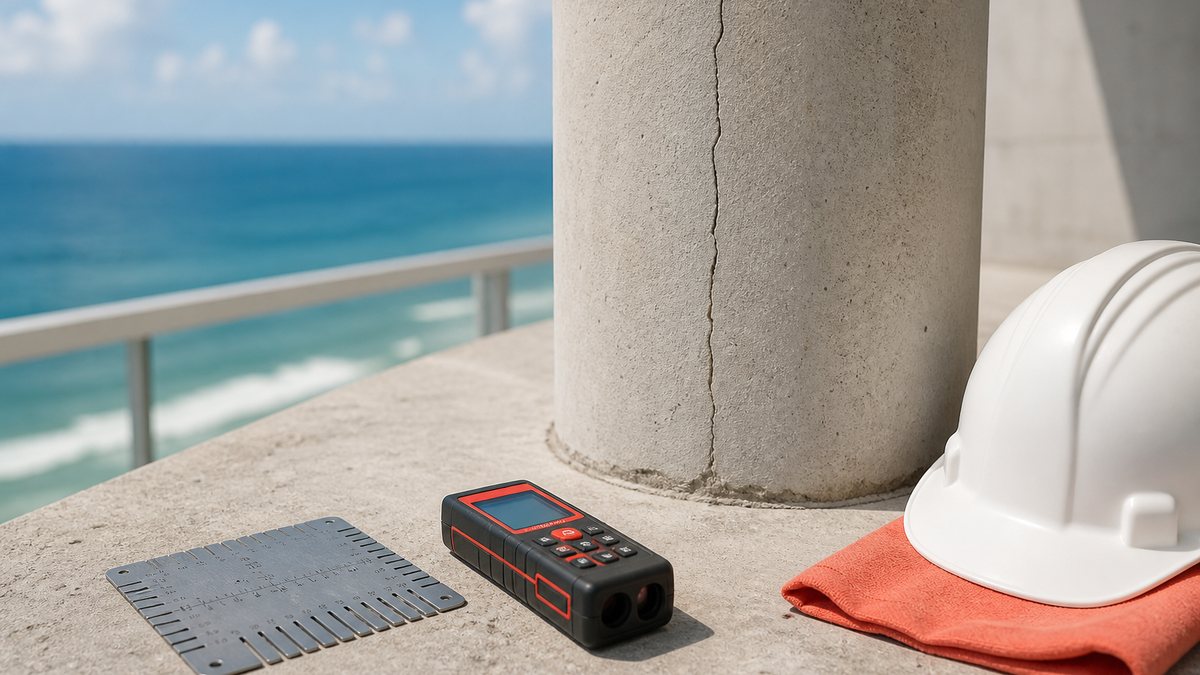
The base flood elevation tells you where FEMA expects the water to reach; the elevation certificate tells you how high the building sits against that level. FEMA shows base flood elevations on the map for zones AE, AH and VE among others (FEMA).
Miami-Dade County puts it this way: "If you have determined that your house lies in a flood zone, a Flood Elevation Certificate can then tell you how high your house was built in relation to that flood zone" (Miami-Dade elevation certificates). The county has collected FEMA elevation certificates from builders since 1995 as a permit requirement, and its site has an elevation certificate search for homes built after that. For an older home that was never substantially improved or damaged, the county says you may need to hire a surveyor or ask the prior owner.
Two reasons to ask for it early in the purchase:
- Renovation plans. Miami-Dade explains the "50 percent rule": if a house in a flood zone is damaged or improved by more than half of its market value, "it will have to be raised to meet the current elevation requirement." An older home built below today's requirement can run into that rule.
- Insurance. FloodSmart says an elevation certificate "can also lower the price" of a flood policy (FloodSmart). A licensed Florida insurance agent can tell you how it affects a quote.
Is flood insurance required in flood zone AE?
Yes, when the mortgage on the building is federally backed or made by a federally regulated lender, and the community takes part in the National Flood Insurance Program.
Federal law directs regulated lenders "not to make, increase, extend, or renew any loan secured by improved real estate" in a special flood hazard area unless the building is covered by flood insurance for the term of the loan (42 U.S.C. 4012a). In map terms, that means every A and V zone, including AE and VE.
A few details of the same law matter to buyers:
- Amount: coverage must be at least the outstanding loan balance or the maximum coverage available for that type of property, "whichever is less" (§ 4012a(b)).
- Detached structures: federal law does not require flood insurance for a detached structure that "does not serve as a residence," such as a detached garage (§ 4012a(c)); ask your lender whether its own loan terms do.
- Condos: the statute refers to flood policies "provided by the condominium association" with the premium paid "as a common expense." Ask the association for its flood policy declarations and ask your lender whether it covers the loan's requirement.
- Cash purchases: the federal mandate rides on the loan, and FloodSmart still says that without a government-backed mortgage, flood insurance is "strongly recommended" in high-risk zones.
Florida's Citizens rule
Florida adds its own rule for homes insured by Citizens Property Insurance Corporation. Citizens must require flood insurance as a condition of coverage for personal residential policies, phased in by replacement cost, with all remaining personal residential properties covered from January 1, 2027. Properties in FEMA's special flood hazard area already need flood coverage. Policies that do not cover wind and condominium unit owners policies are exempt (Fla. Stat. § 627.351(6)(aa)).
Timing at closing
FloodSmart says a National Flood Insurance Program policy usually takes effect thirty days after purchase, with "no wait if you buy flood insurance while making, increasing, extending or renewing a mortgage" (FloodSmart). It also says a buyer of a home in a higher-risk zone "may be able to assume the prior owner's current NFIP policy" (FloodSmart flood zones). Coverage terms and prices are questions for a licensed Florida insurance agent.
Florida's flood disclosure: what the seller must tell you
A Florida seller of residential real property must give the buyer a flood disclosure "at or before the time the sales contract is executed" (Fla. Stat. § 689.302). The form is set by statute. It states that homeowners' insurance policies "do not include coverage for damage resulting from floods" and asks the seller whether they:
- know of flooding that damaged the property during their ownership;
- filed a flood damage claim with an insurer, including the National Flood Insurance Program;
- received flood damage assistance, including from FEMA.
The disclosure does not ask for the flood zone or the building's elevation, and it covers only the seller's own knowledge, claims and assistance. The zone lookup and the elevation records described above fill that gap. For what a disclosure means for your contract, talk to a Florida real estate attorney.
A buyer's flood checklist for Miami
Flood answers affect the loan, the insurance quote and any renovation plan, so when buying a house in flood zone AE, or anywhere in Miami-Dade, get them before the inspection period ends. Here are the steps from this guide in one order:
- Look up the effective and the preliminary zone for the address.
- Get the elevation certificate from the seller, the county search or a surveyor.
- Read the seller's flood disclosure.
- For a condo, ask the association for its flood policy and the zone it uses.
- Ask your lender whether flood insurance will be required.
- Get quotes from a licensed Florida insurance agent, and ask whether the current owner's policy can be assumed.
- If renovation is the plan, check the 50 percent rule with the city's or county's building department first.
For the rest of the purchase steps, including condo association documents, see how to buy a house in Florida. To search the city itself, see homes for sale in the City of Miami.
This is general information, not legal advice and not insurance advice. Ask a Florida real estate attorney about your contract and a licensed Florida insurance agent about coverage.
FAQ
Is flood zone AE bad?
AE is a high-risk zone, not a verdict on any one building. What matters for a purchase is the building's elevation against the base flood elevation, its flood history, the lender's insurance requirement and the cost of a policy. Ask for the elevation certificate and the seller's flood disclosure, and get quotes from a licensed Florida insurance agent.
What is the difference between flood zone A and AE?
Both are high-risk zones. In Zone A, Miami-Dade County explains, detailed analyses were not done, so no depths or base flood elevations are shown. Zone AE is the base floodplain where FEMA does show base flood elevations, which makes it possible to compare a building's elevation with the expected flood level.
Do I need flood insurance in zone X?
Federal law does not require it for a mortgage in zone X. FEMA recommends flood insurance in low and moderate risk zones. Florida's Citizens Property Insurance has its own flood insurance rule for many of its personal residential policies. A licensed Florida insurance agent can tell you what applies.
Can my flood zone change?
Yes. FEMA updates flood maps, and Miami-Dade has preliminary maps that may change before they take effect. An owner can also ask FEMA for a Letter of Map Amendment or a Letter of Map Revision Based on Fill if the property sits above the base flood. A granted request can end the federal insurance requirement for that structure.
Sources
- Flood Zones (FEMA glossary), Federal Emergency Management Agency, accessed Oct 24, 2026
- Zone AE (FEMA glossary), Federal Emergency Management Agency, accessed Oct 24, 2026
- Zone AH (FEMA glossary), Federal Emergency Management Agency, accessed Oct 24, 2026
- Zone AO (FEMA glossary), Federal Emergency Management Agency, accessed Oct 24, 2026
- Zone VE and V1-30 (FEMA glossary), Federal Emergency Management Agency, accessed Oct 24, 2026
- Zone V (FEMA glossary), Federal Emergency Management Agency, accessed Oct 24, 2026
- Base Flood Elevation (BFE) (FEMA glossary), Federal Emergency Management Agency, accessed Oct 24, 2026
- Elevation Certificate (FEMA glossary), Federal Emergency Management Agency, accessed Oct 24, 2026
- Change Your Flood Zone Designation, Federal Emergency Management Agency, accessed Oct 24, 2026
- FEMA Flood Map Service Center, Federal Emergency Management Agency, accessed Oct 24, 2026
- What is my Flood Zone | National Flood Insurance Program, FEMA National Flood Insurance Program, accessed Oct 24, 2026
- What is My Flood Risk | The National Flood Insurance Program, FEMA National Flood Insurance Program, accessed Oct 24, 2026
- Buy a Flood Insurance Policy | National Flood Insurance Program, FEMA National Flood Insurance Program, accessed Oct 24, 2026
- Flood Zone Maps, Miami-Dade County, accessed Oct 24, 2026
- Elevation Certificates, Miami-Dade County, accessed Oct 24, 2026
- Building Flood Awareness - City of Miami Beach, City of Miami Beach, accessed Oct 24, 2026
- 42 U.S.C. § 4012a, Flood insurance purchase and compliance requirements, Legal Information Institute, Cornell Law School (U.S. Code text), accessed Oct 24, 2026
- Fla. Stat. § 627.351 (2026), The Florida Senate, accessed Oct 24, 2026
- Fla. Stat. § 689.302 (2026), The Florida Senate, accessed Oct 24, 2026
What changed
- : First published.

Talk to Marina
Marina Garan, REALTOR®, Broker Associate
London Foster Realty
FL lic. BK3336901 · Brokerage lic. CQ1046685
How we wrote this: This article has no market figures. It is general information, not legal, tax or insurance advice. Spot an error? Call or text (786) 751-5111 · London Foster Realty.